Thursday, March 27, 2014

A Part of the Team

My coworkers Nicaragua went above and beyond in making me feel welcome and part of the team. 

It was much more than the party they held when we arrived. Every day they asked after me, doing little things requested and unasked for to make my visit go more smoothly. 
Alvaro getting a hammock for me.

For example, Evelyn arranged a special stop of the express bus so I could get to the airport quickly and comfortably. Salvador came in extra early to wish me goodbye. Alvaro took me to the bus stop and while we were waiting by the hammock stand and bought me a hammock to bring home. Walter stopped his motorcycle on his way to work and Evelyn go off her bus early to join us for the send off, so I had a big group waving good bye as the bus pulled away.

Vegan chicharones and fresh salad
And it wasn't just them. Joel Nahun and Darlin invited me into their home for two vegetarian meals a day, always accompanied by a drink made from fruit or oats or soy.  They and their lovely housekeeper Faviola made me vegetarian versions of many traditional foods, including chicharones and nacatamales. They invited me on their family outings on the weekends. 
My very own "feo" nacatamales.
Several people generously invited me to their homes, doing their best to provide vegetarian food that would not make my poor gringa stomach sick. I especially appreciated the lunch with Salvador, his brother, and their friend Chris, an ex-Peace Corp volunteer, who is one of the few gringos in San Isidro. We passed the afternoon discussing culture, politics and religion, and I enjoyed myself immensely. 

Everyone handled my clumsy pronunciation and lack of comprehension with grace. Even more, they overlooked my lack of knowledge of their culture and my sometimes awkward introversion, and continued to welcome me warmly. 

Thank you Nicaraguan friends for helping me feel so at home! I look forward to seeing you again some day!

Wednesday, March 26, 2014

Impact of the Observer

One of my biggest projects here has been to to revise our impact assessments and create a cloud-based system for managing all our data. 

Salvador and I spent lots of time writing and revising questions, generating lists of every installation we have ever done, and putting it all into a database I customized. The dream is that in the near future we will have a map of all our installations, with info and a photo of each, updating live from our database. We also plan to generate automatically graphs of how many technologies we have installed and how many people we have served. 

These are all grand ideas. And real life tends to get in the way. Of course the internet is sometimes down or painfully slow, making a cloud based system difficult to use. 

But even more interesting and perhaps vexing is what happens in the field. I was glad to get the opportunity to go with Salvador the first few times he administered the survey.

I shouldn't have been surprised but I was that the answers we received were not always the whole truth. After all, Salvador had been the person who had installed the technology and I was the gringa representing the organization in the States that paid a share of the costs, making it affordable to them. Of course they wanted to appear grateful and that things were going well. 

But things were not always going well. Sometimes it was apparent from the partially inflated biodigestor bag. Sometime they told us outright. But when it was time to answer the survey questions, they gave very positive answers. 

One of our beneficiaries was cooking on gas from the biodigestor when we showed up.
This is somewhat unavoidable. There is always bias. But Salvador and I had to regroup and figure out a bit how to give the survey to get more realistic answers. 

As I travel to Managua to head home today, he gets on his motorcycle to visit dozens of families and try out our survey again. I look forward to seeing what it yields. 

But this shouldn't obscure the impact we are having. When we ask what they are doing with the money they are saving with our technologies, many times they think a moment and then answer more or better food. 

To me this is a symbol of the level of poverty these folks face and what we can do for them. With a biodigestor they breathe less smoke, they are participating less in deforestation and they are contributing less to climate change by using the methane from their animals' manure to cook. But perhaps what they feel most is they can afford a little more food, feel a little more satisfied and stave off malnutrition in their families. 


I am grateful to be part of an organization that helps people live healthier lives while protecting the environment at the same time. 

Sunday, March 23, 2014

It's a young country

Nicaragua went through a revolution and civil war in the 70s and 80s.  It also experienced a terrible earthquake in '72 that leveled its capital city and more. So in many ways, Nicaragua is early in its development as a stable modern state.

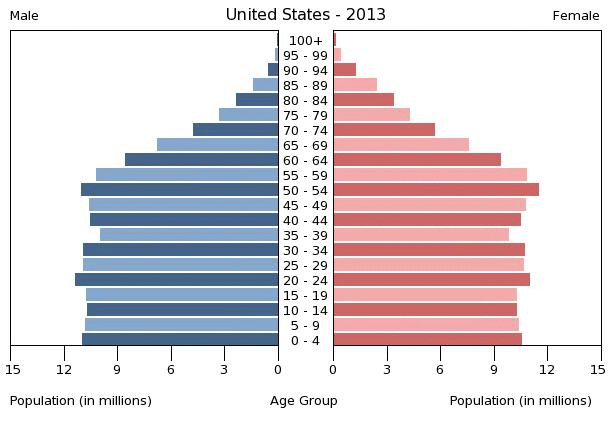
But it is also a young country. More than half the population is under the age of 25 (compared with 34% in the US) and only about 10% of the population is 55 or older (compared with 26% in the US). The median age is 23 or so.


source: http://www.indexmundi.com/
I'm reading a book called Blood of Brothers by American journalist Stephen Kinzer who lived in and reported on Nicaragua throughout most of the 70s and 80s. It is a fascinating insight into that time.  It's interesting to read it now and hear about the foxholes in the rice fields where I am and about the fighting in the mountains I visited. I can see the places in the book in my mind and see how much this country has changed since then.

I want to ask people about their personal experience of that tumultuous time and understand how it has shaped the culture and consciousness of the people.

However, I have hardly spoken to a person over the age of 40.  It may be that older Nicaraguans are less inclined to speak to a gringa for various reasons. But frankly, I don't run into that many. At 39 I'm the oldest person in my office.

I wonder about the dynamics this creates about the place of history and memory.  Perhaps it is best that there are so many people who can't remember the torture of the dictator, the bloody fighting that took place in cities and the countryside, and the extreme shortages of food and other basic supplies in the 80s. Perhaps they are more hopeful and unfettered.

But I also think experience brings wisdom.  How do they avoid repeating the mistakes that were made in the recent past? How do they avoid a questionable government rewriting history in their favor as they rewrite the schoolbooks?

Regardless, I have really appreciated everyone sharing their experience with me and answering my endless stream of questions, even if they can't answer what it was like to live through the war.

Saturday, March 22, 2014

Sort of semi utopia

I'm sure Miraflor has problems. There is certainly poverty. They are a community dependent on the coffee harvest and yet their plants have been afflicted by a fungus that has virtually destroyed their crop for several years running. 

But to me they are a symbol of what can happen. 

I needed a break from my computer and the heat. And I had fond memories of a visit to Miraflor three years ago. So I took a long bumpy bus ride up the mountain. 
photo: nicatour.net
I stayed at the same homestay I did last time, with Doña Lucia. She has an incredible garden with medicinals, edibles and ornamentals. She greets her guests with tea that is a mix of valerian, mango leaf, and mint - perfect after the dusty bus ride. 

She talks freely of the changes wrought by the empowerment of women in her community. There are many women's cooperatives, giving women their own income. And I was invited to join a tour her nephew Henry was giving to a group of college students. 

Henry spoke eloquently of his own experience as a child, living with a lot of violence in his home. Then with the war, women gained self esteem as workers and fighters. This was followed by training of both the women and men in awareness of gender oppression.  

He says domestic violence dropped precipitously. Women and men share the housework. This is a sharp contrast to San Isidro where machismo runs rampant and I was told no men even know how to cook. 

Henry said the men made a video to help train other communities, sharing their experience of combating machismo. 

Another thing that really impressed me is in a country where alcoholism is such a problem, they have prohibited the sale of alcohol in their community. 

They have also made a commitment to shade grown organic coffee. They created cooperatives to help secure their economic position. And they have organized ecotourism to supplement their agriculture. 

Which is really what brought me there. There is a fellow named Nelson who grew up in this remote farming community. And he has taught himself to be an excellent birder. His enthusiasm is contagious. When I correctly identify a bird I get a fist bump. And he takes every opportunity to share his love and knowledge of birds with anyone around, even the random Nicas waiting at the bus stop. 

There are so many rural communities out there with similar conditions and somehow Miraflor made itself into someplace special. The question I keep asking aloud and in my head is, how do we support other communities to do the same?

Friday, March 21, 2014

Usted y vos (y tú)

When I took high school Spanish, I learned two forms of you. Usted, formal, and tú, informal. Those forms are ingrained in my mind. And this isn't just about the pronoun. Every verb conjugates differently based on this, and there are reflexive and object pronouns as well.  And in my generally informal style, I've just called everyone by tú. It has made things very simple. Especially because the word used for the reflexive and object pronouns are all the same with tú, so I don't even really have to pay attention to what kind of word it is. 

Well in Nicaragua they don't use tú. I've even been advised it can sound kind of snobby because people hear it on the Mexican soap operas. 

Instead they use vos. And I must admit the conjugation of vos is not difficult but old habits die hard. 

And to make things more confusing, there are cultural norms around when you use usted vs vos, and they change depending on where you are. Maybe you use vos only with children and animals. Or maybe with family and close friends. Or maybe with anyone younger than you (though how you determine that I don't know). 

So I do my best to use usted with everyone who isn't a child or animal. I figure it's best to err on the side of respect. But I think there are two problems with this. 

I have to think harder to conjugate verbs with usted and I'm lost sometimes on whether to use se, lo/la or le. So my sentences tend to include a jumble of versions of referring to you. I must be confusing to listen to. 

Second, I'm not sure usted is always the right choice. I'm concentrating so hard on understanding the gist of conversations I don't always perceive when people are using vos or usted with me. But sometimes I catch people using vos then switching to usted after they hear me use it. I wonder if I'm accidentally creating some interpersonal distance, constantly asserting that I'm not letting people close enough to use vos with them?

Regardless, I'm generally thankful that Nicaraguans tend to be a pretty tolerant lot. They laugh at my missteps rarely, at times when even I have to admit they are pretty darn funny. They do their best to help me understand what is going on most of the time, and sometimes correct my pronunciation or conjugation of the same word a dozen times before I finally get it. 

What do usted/vos/tú think?

Especialmente usted Evelyn.  Yo sé que usted está leyendo este blog. :-)

Thursday, March 20, 2014

Nica Transportation

I've spent a lot of time on different forms of transportation. Right now I'm writing from a school bus converted to an intercity bus service. It is commonly called a chicken bus by backpackers, though in all my bus trips in Central America I've never seen a chicken on one. But I have seem plenty of produce, furniture, and practically anything else you might want to move around. 

They are privately owned and in Nicaragua surprisingly and blessedly run on a very predictable schedule. In fact, I think my 1:45 bus pulled out at 1:44 according to my iPhone. 

Oops, I forgot to get the photo credit on this one.
They are often elaborately decorated and thanks to God may sit side by side with trucker babes.  They are also quite cheap, costing about a dollar even for long rides. 

And they are entertaining in their own way. Vendors jump on at one stop and off at the next, loudly hawking their wares. The guys who work for the bus take the big gear onto the roof, strapping it down and climbing back down into the bus as it is moving. 

But where I live in San Isidro the second most popular form of locomotion after walking is bicycling. I've seen lots of things carried in bike, from whole families to 20' lengths of pipe. I'm so lucky to have one lent to me. 

photo: wejetset.com
I haven't yet tried the prevalent bike taxis, though I want to before I leave. Young men bike around with a seat and awning in front of them and haul just about anything. Wes told me he regularly used them to haul barrels to make ovens with in the early days of EOS. 

I forgot the photo credit on this one, too.  I'm sort of tired.
And in my cowboy town there are of course horses. I haven't tried that either. 

There are actually a surprising number of wheelchairs for a developing country, especially one that hardly has sidewalks, much less handicapped ramps.  I did see a fellow propelling himself up a hill on a bumpy rock road in his wheelchair, seemingly far from anything.

It seems that for many the first step into motorized vehicles is a motorcycle. They look at me funny when I say how dangerous they are. It's not recreation here, but a necessity, and is probably as unusual as someone bad mouthing cars in the US (which I've been known to do as well). I've rarely seen women driving them though. And while I see plenty of women riding on the back, I have not yet seen a woman driving with a man on the back. 

Sure there are passenger cars and taxis, but I don't see too many of those in San Isidro. It seems the next step is a pick up truck. I haven't seen this much in San Isidro but it is a classic Central American experience to see a truck bed packed with goods, people or both. I did ride some in the back of the EOS truck, but primarily because we had all our gear in the back and when driving through larger cities, it's just dumb to stop at an intersection with a truck bed full of interesting looking stuff and not have someone there to watch it.

The guy perched on the front on top of all the sacks ducked down just as I was taking the picture,
but you get the point.

And of course in the countryside there are ox carts. And like many other vehicles, they can be loaded to their physical limits. 
photo: Steve & Chelsey Currie

It's a diversity of choices driven by economics and also often run by small business owners. 

Monday, March 17, 2014

Climbing the Economic Ladder?

So I wrote this really great and well researched post yesterday evening about economic development and Nicaragua, and put it aside to proofread today. Then somehow today is was gone, without a trace. You know, it's never as good the second time, but these are important thoughts to me, so I'm trying again.

I'm living within a middle class Nicaraguan life.  The houses are solid, there is running water and electricity, plenty of delicious food, and even motorized vehicles.  Most of the families have two parents, each of which work, study or both, on top of taking care of their family and home. They have worked hard to create a middle class life, often from humble backgrounds.

But this lifestyle is a thin veneer on life in Nicaragua. Sandwiched in between these houses are others made of corrugated metal, rough hewn wood, and earth. People cook over smoky open fires.  In the countryside, the middle class is virtually nonexistent.

Nicaragua is the second poorest country in the hemisphere.  Nearly 45% of people live below the poverty line, meaning they earn less than $1.25 a day in 2005 dollars. The GDP per capita is $3,300, and 15% of that comes from earnings sent from family overseas. Socialism has brought them free education, but nearly 50% of Nicaraguans are un- or under-employed. Malnutrition and diarrheal disease make the top twenty causes of death, both of which hardly register in the US.


Yet people do what they can. Some work long days hauling sacks of grain. It seems that most homes have some form of business, selling food or offering services. They post signs or paint directly on the building what they have to offer (usually preceded by the word "hay," meaning "there is"). Or in some cases, everyone just knows to pass through the alley to enter the kitchen of the woman who makes and sells beans and tortillas.


There are many economic theories about international development. Some say people are trapped in a cycle of poverty, and just need a boost to reach the bottom rung of the ladder of progress.  Then they can pull themselves up the rest of the way.  I'm not an economist and am new to the field, so I can't claim to know what is true.


But I do know that when some women learn about our ovens, they figure out a way to pull together the money to pay for their share of the cost. They quickly build up successful businesses that employ other family members. They have dreams and seem well on their way to attaining them.

Tomorrow I will go out and see some biodigestors and drip irrigation systems.  I'm curious to see what impact the drip irrigation systems in particular have on people's lives.  Are they spending less on food?  Are they making a small business of selling food they can grow during the dry season?

I'm excited to be part of an organization that helps people improve their own lives, while keeping the environmental impact in mind.