Thursday, March 27, 2014

A Part of the Team

My coworkers Nicaragua went above and beyond in making me feel welcome and part of the team. 

It was much more than the party they held when we arrived. Every day they asked after me, doing little things requested and unasked for to make my visit go more smoothly. 
Alvaro getting a hammock for me.

For example, Evelyn arranged a special stop of the express bus so I could get to the airport quickly and comfortably. Salvador came in extra early to wish me goodbye. Alvaro took me to the bus stop and while we were waiting by the hammock stand and bought me a hammock to bring home. Walter stopped his motorcycle on his way to work and Evelyn go off her bus early to join us for the send off, so I had a big group waving good bye as the bus pulled away.

Vegan chicharones and fresh salad
And it wasn't just them. Joel Nahun and Darlin invited me into their home for two vegetarian meals a day, always accompanied by a drink made from fruit or oats or soy.  They and their lovely housekeeper Faviola made me vegetarian versions of many traditional foods, including chicharones and nacatamales. They invited me on their family outings on the weekends. 
My very own "feo" nacatamales.
Several people generously invited me to their homes, doing their best to provide vegetarian food that would not make my poor gringa stomach sick. I especially appreciated the lunch with Salvador, his brother, and their friend Chris, an ex-Peace Corp volunteer, who is one of the few gringos in San Isidro. We passed the afternoon discussing culture, politics and religion, and I enjoyed myself immensely. 

Everyone handled my clumsy pronunciation and lack of comprehension with grace. Even more, they overlooked my lack of knowledge of their culture and my sometimes awkward introversion, and continued to welcome me warmly. 

Thank you Nicaraguan friends for helping me feel so at home! I look forward to seeing you again some day!

Wednesday, March 26, 2014

Impact of the Observer

One of my biggest projects here has been to to revise our impact assessments and create a cloud-based system for managing all our data. 

Salvador and I spent lots of time writing and revising questions, generating lists of every installation we have ever done, and putting it all into a database I customized. The dream is that in the near future we will have a map of all our installations, with info and a photo of each, updating live from our database. We also plan to generate automatically graphs of how many technologies we have installed and how many people we have served. 

These are all grand ideas. And real life tends to get in the way. Of course the internet is sometimes down or painfully slow, making a cloud based system difficult to use. 

But even more interesting and perhaps vexing is what happens in the field. I was glad to get the opportunity to go with Salvador the first few times he administered the survey.

I shouldn't have been surprised but I was that the answers we received were not always the whole truth. After all, Salvador had been the person who had installed the technology and I was the gringa representing the organization in the States that paid a share of the costs, making it affordable to them. Of course they wanted to appear grateful and that things were going well. 

But things were not always going well. Sometimes it was apparent from the partially inflated biodigestor bag. Sometime they told us outright. But when it was time to answer the survey questions, they gave very positive answers. 

One of our beneficiaries was cooking on gas from the biodigestor when we showed up.
This is somewhat unavoidable. There is always bias. But Salvador and I had to regroup and figure out a bit how to give the survey to get more realistic answers. 

As I travel to Managua to head home today, he gets on his motorcycle to visit dozens of families and try out our survey again. I look forward to seeing what it yields. 

But this shouldn't obscure the impact we are having. When we ask what they are doing with the money they are saving with our technologies, many times they think a moment and then answer more or better food. 

To me this is a symbol of the level of poverty these folks face and what we can do for them. With a biodigestor they breathe less smoke, they are participating less in deforestation and they are contributing less to climate change by using the methane from their animals' manure to cook. But perhaps what they feel most is they can afford a little more food, feel a little more satisfied and stave off malnutrition in their families. 


I am grateful to be part of an organization that helps people live healthier lives while protecting the environment at the same time. 

Sunday, March 23, 2014

It's a young country

Nicaragua went through a revolution and civil war in the 70s and 80s.  It also experienced a terrible earthquake in '72 that leveled its capital city and more. So in many ways, Nicaragua is early in its development as a stable modern state.

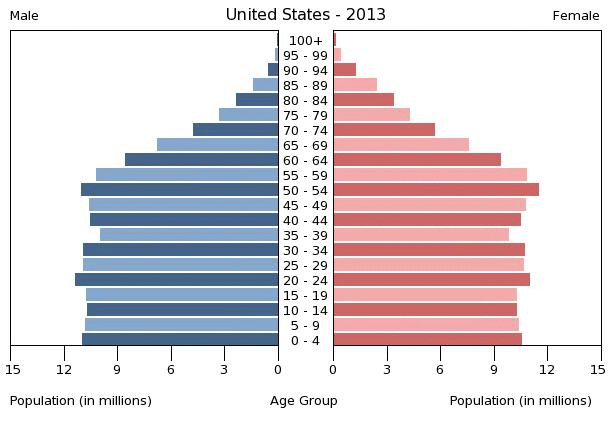
But it is also a young country. More than half the population is under the age of 25 (compared with 34% in the US) and only about 10% of the population is 55 or older (compared with 26% in the US). The median age is 23 or so.


source: http://www.indexmundi.com/
I'm reading a book called Blood of Brothers by American journalist Stephen Kinzer who lived in and reported on Nicaragua throughout most of the 70s and 80s. It is a fascinating insight into that time.  It's interesting to read it now and hear about the foxholes in the rice fields where I am and about the fighting in the mountains I visited. I can see the places in the book in my mind and see how much this country has changed since then.

I want to ask people about their personal experience of that tumultuous time and understand how it has shaped the culture and consciousness of the people.

However, I have hardly spoken to a person over the age of 40.  It may be that older Nicaraguans are less inclined to speak to a gringa for various reasons. But frankly, I don't run into that many. At 39 I'm the oldest person in my office.

I wonder about the dynamics this creates about the place of history and memory.  Perhaps it is best that there are so many people who can't remember the torture of the dictator, the bloody fighting that took place in cities and the countryside, and the extreme shortages of food and other basic supplies in the 80s. Perhaps they are more hopeful and unfettered.

But I also think experience brings wisdom.  How do they avoid repeating the mistakes that were made in the recent past? How do they avoid a questionable government rewriting history in their favor as they rewrite the schoolbooks?

Regardless, I have really appreciated everyone sharing their experience with me and answering my endless stream of questions, even if they can't answer what it was like to live through the war.

Saturday, March 22, 2014

Sort of semi utopia

I'm sure Miraflor has problems. There is certainly poverty. They are a community dependent on the coffee harvest and yet their plants have been afflicted by a fungus that has virtually destroyed their crop for several years running. 

But to me they are a symbol of what can happen. 

I needed a break from my computer and the heat. And I had fond memories of a visit to Miraflor three years ago. So I took a long bumpy bus ride up the mountain. 
photo: nicatour.net
I stayed at the same homestay I did last time, with Doña Lucia. She has an incredible garden with medicinals, edibles and ornamentals. She greets her guests with tea that is a mix of valerian, mango leaf, and mint - perfect after the dusty bus ride. 

She talks freely of the changes wrought by the empowerment of women in her community. There are many women's cooperatives, giving women their own income. And I was invited to join a tour her nephew Henry was giving to a group of college students. 

Henry spoke eloquently of his own experience as a child, living with a lot of violence in his home. Then with the war, women gained self esteem as workers and fighters. This was followed by training of both the women and men in awareness of gender oppression.  

He says domestic violence dropped precipitously. Women and men share the housework. This is a sharp contrast to San Isidro where machismo runs rampant and I was told no men even know how to cook. 

Henry said the men made a video to help train other communities, sharing their experience of combating machismo. 

Another thing that really impressed me is in a country where alcoholism is such a problem, they have prohibited the sale of alcohol in their community. 

They have also made a commitment to shade grown organic coffee. They created cooperatives to help secure their economic position. And they have organized ecotourism to supplement their agriculture. 

Which is really what brought me there. There is a fellow named Nelson who grew up in this remote farming community. And he has taught himself to be an excellent birder. His enthusiasm is contagious. When I correctly identify a bird I get a fist bump. And he takes every opportunity to share his love and knowledge of birds with anyone around, even the random Nicas waiting at the bus stop. 

There are so many rural communities out there with similar conditions and somehow Miraflor made itself into someplace special. The question I keep asking aloud and in my head is, how do we support other communities to do the same?

Friday, March 21, 2014

Usted y vos (y tú)

When I took high school Spanish, I learned two forms of you. Usted, formal, and tú, informal. Those forms are ingrained in my mind. And this isn't just about the pronoun. Every verb conjugates differently based on this, and there are reflexive and object pronouns as well.  And in my generally informal style, I've just called everyone by tú. It has made things very simple. Especially because the word used for the reflexive and object pronouns are all the same with tú, so I don't even really have to pay attention to what kind of word it is. 

Well in Nicaragua they don't use tú. I've even been advised it can sound kind of snobby because people hear it on the Mexican soap operas. 

Instead they use vos. And I must admit the conjugation of vos is not difficult but old habits die hard. 

And to make things more confusing, there are cultural norms around when you use usted vs vos, and they change depending on where you are. Maybe you use vos only with children and animals. Or maybe with family and close friends. Or maybe with anyone younger than you (though how you determine that I don't know). 

So I do my best to use usted with everyone who isn't a child or animal. I figure it's best to err on the side of respect. But I think there are two problems with this. 

I have to think harder to conjugate verbs with usted and I'm lost sometimes on whether to use se, lo/la or le. So my sentences tend to include a jumble of versions of referring to you. I must be confusing to listen to. 

Second, I'm not sure usted is always the right choice. I'm concentrating so hard on understanding the gist of conversations I don't always perceive when people are using vos or usted with me. But sometimes I catch people using vos then switching to usted after they hear me use it. I wonder if I'm accidentally creating some interpersonal distance, constantly asserting that I'm not letting people close enough to use vos with them?

Regardless, I'm generally thankful that Nicaraguans tend to be a pretty tolerant lot. They laugh at my missteps rarely, at times when even I have to admit they are pretty darn funny. They do their best to help me understand what is going on most of the time, and sometimes correct my pronunciation or conjugation of the same word a dozen times before I finally get it. 

What do usted/vos/tú think?

Especialmente usted Evelyn.  Yo sé que usted está leyendo este blog. :-)

Thursday, March 20, 2014

Nica Transportation

I've spent a lot of time on different forms of transportation. Right now I'm writing from a school bus converted to an intercity bus service. It is commonly called a chicken bus by backpackers, though in all my bus trips in Central America I've never seen a chicken on one. But I have seem plenty of produce, furniture, and practically anything else you might want to move around. 

They are privately owned and in Nicaragua surprisingly and blessedly run on a very predictable schedule. In fact, I think my 1:45 bus pulled out at 1:44 according to my iPhone. 

Oops, I forgot to get the photo credit on this one.
They are often elaborately decorated and thanks to God may sit side by side with trucker babes.  They are also quite cheap, costing about a dollar even for long rides. 

And they are entertaining in their own way. Vendors jump on at one stop and off at the next, loudly hawking their wares. The guys who work for the bus take the big gear onto the roof, strapping it down and climbing back down into the bus as it is moving. 

But where I live in San Isidro the second most popular form of locomotion after walking is bicycling. I've seen lots of things carried in bike, from whole families to 20' lengths of pipe. I'm so lucky to have one lent to me. 

photo: wejetset.com
I haven't yet tried the prevalent bike taxis, though I want to before I leave. Young men bike around with a seat and awning in front of them and haul just about anything. Wes told me he regularly used them to haul barrels to make ovens with in the early days of EOS. 

I forgot the photo credit on this one, too.  I'm sort of tired.
And in my cowboy town there are of course horses. I haven't tried that either. 

There are actually a surprising number of wheelchairs for a developing country, especially one that hardly has sidewalks, much less handicapped ramps.  I did see a fellow propelling himself up a hill on a bumpy rock road in his wheelchair, seemingly far from anything.

It seems that for many the first step into motorized vehicles is a motorcycle. They look at me funny when I say how dangerous they are. It's not recreation here, but a necessity, and is probably as unusual as someone bad mouthing cars in the US (which I've been known to do as well). I've rarely seen women driving them though. And while I see plenty of women riding on the back, I have not yet seen a woman driving with a man on the back. 

Sure there are passenger cars and taxis, but I don't see too many of those in San Isidro. It seems the next step is a pick up truck. I haven't seen this much in San Isidro but it is a classic Central American experience to see a truck bed packed with goods, people or both. I did ride some in the back of the EOS truck, but primarily because we had all our gear in the back and when driving through larger cities, it's just dumb to stop at an intersection with a truck bed full of interesting looking stuff and not have someone there to watch it.

The guy perched on the front on top of all the sacks ducked down just as I was taking the picture,
but you get the point.

And of course in the countryside there are ox carts. And like many other vehicles, they can be loaded to their physical limits. 
photo: Steve & Chelsey Currie

It's a diversity of choices driven by economics and also often run by small business owners. 

Monday, March 17, 2014

Climbing the Economic Ladder?

So I wrote this really great and well researched post yesterday evening about economic development and Nicaragua, and put it aside to proofread today. Then somehow today is was gone, without a trace. You know, it's never as good the second time, but these are important thoughts to me, so I'm trying again.

I'm living within a middle class Nicaraguan life.  The houses are solid, there is running water and electricity, plenty of delicious food, and even motorized vehicles.  Most of the families have two parents, each of which work, study or both, on top of taking care of their family and home. They have worked hard to create a middle class life, often from humble backgrounds.

But this lifestyle is a thin veneer on life in Nicaragua. Sandwiched in between these houses are others made of corrugated metal, rough hewn wood, and earth. People cook over smoky open fires.  In the countryside, the middle class is virtually nonexistent.

Nicaragua is the second poorest country in the hemisphere.  Nearly 45% of people live below the poverty line, meaning they earn less than $1.25 a day in 2005 dollars. The GDP per capita is $3,300, and 15% of that comes from earnings sent from family overseas. Socialism has brought them free education, but nearly 50% of Nicaraguans are un- or under-employed. Malnutrition and diarrheal disease make the top twenty causes of death, both of which hardly register in the US.


Yet people do what they can. Some work long days hauling sacks of grain. It seems that most homes have some form of business, selling food or offering services. They post signs or paint directly on the building what they have to offer (usually preceded by the word "hay," meaning "there is"). Or in some cases, everyone just knows to pass through the alley to enter the kitchen of the woman who makes and sells beans and tortillas.


There are many economic theories about international development. Some say people are trapped in a cycle of poverty, and just need a boost to reach the bottom rung of the ladder of progress.  Then they can pull themselves up the rest of the way.  I'm not an economist and am new to the field, so I can't claim to know what is true.


But I do know that when some women learn about our ovens, they figure out a way to pull together the money to pay for their share of the cost. They quickly build up successful businesses that employ other family members. They have dreams and seem well on their way to attaining them.

Tomorrow I will go out and see some biodigestors and drip irrigation systems.  I'm curious to see what impact the drip irrigation systems in particular have on people's lives.  Are they spending less on food?  Are they making a small business of selling food they can grow during the dry season?

I'm excited to be part of an organization that helps people improve their own lives, while keeping the environmental impact in mind.

Sunday, March 16, 2014

Dangers Real and Perceived

I have received so many warnings on so many fronts.  Be careful. Watch your passport, your pockets. Don't go there alone. Watch out for drunks. 

Is Nicaragua dangerous?

Sure, there are pickpockets and bike thieves. Anyone with a building that has something worth stealing locks it. Alcoholism is a problem and it is not uncommon here in San Isidro to see men passed out on the sidewalk anytime of day. 

But it is not my perception that this is a violent place. Drug trafficking hasn't led to disturbing violence like in some other Latin American countries.  The murder rate is 12.6 per 100,000, half the rate of Mexico and one-third the rate of Guatemala. In Oakland, where I spend lots of time, it is 31.8. Unfortunately most countries do not keep reliable statistics about sexual assault, which I assume is the subtext under many of these warnings. 


I'm pretty sure the most danger I put myself in was getting on the road. Just like in the United States, the most likely cause of accidental death (not from a disease) is a traffic accident. And those risks are intensified here by the culture. Whole families get on bicycles, motorcycles and in the cabs of trucks. If a helmet is worn, it is only worn by the driver of the motorcycle. And even if a vehicle had seatbelts, there is no way to put a seatbelt on the 3 year old perched on the shoulder of his parents. Let's not even talk about the lack of car seats. It is amusing for me to watch the guys scrambling around on the roof of the school bus as it bumps along a rocky road, but I suspect that sometimes accidents happen. 
source: http://www.thetravelword.com/

Additionally, while some Nicaraguan drivers are very cautious, I find that to be the exception. However, when I get in a vehicle with my host family to go to the park with the monkeys and visit the lookout over the city, no one tells me to be careful. Even if that is the closest to injury I have come. 

Of course in the US and Nicaragua, and worldwide, the leading cause of death is heart disease. No one warned me of dangers of all the smoke, or unhealthy food, or of the dangers of inactivity because of fear of leaving my safe world behind lock and key. 

Walking on a well trodden trail (judging from the amount of horse droppings) while searching for birds this morning, an older gentleman passed me with a large bundle of firewood in his head. After the compulsory exchange of "Adios", he asked me:
"Are you alone?"
"Yes"
"Without a man?"
"Yes"
After a brief pause came his simple question:
"Why?"

There are so many cultural assumptions in this question. I told him I was out walking to see the birds.  After a pause where he looked at me confused, I asked him if this was ok. I should have known his answer. No, you shouldn't be here alone. 

Everyone I met on that trail, whether coming out of their houses or walking to work their land with dogs in tow were friendly, or at least polite. 


And I saw some beautiful birds. 

Turquiose-browed Mot Mot
source: http://travelexperta.com/


Friday, March 14, 2014

Life Doesn't Happen According to Plan

I know, I know. Life doesn't happen according to plan. But often on a day to day level it more or less does for me.  I have more say and flexibility in my life than most. 

This is not how it goes in Nicaragua. Like many places, Nicaragua runs on Nica time, which can be difficult to predict. And an 8am departure changed, for various reasons, into an 11am departure. 

We went to visit a coffee farm and ecotourism hotel up the mountain from Matagalpa. But aside from the late start we got lost, which yielded a great view of some aracaris, but a very late arrival to Finca Esperanza Verde. 


We cane to wrap things up on a recent installation of solar panels, and for me to see a different part of the country and to try out our new impact surveys. 

Finca Esperanza Verde is gorgeous and owner is very nice, in case you are ever in the area. But they are not our standard clients.
View from one of the cabins at Finca Esperanza Verde,
with a view of the panels EOS installed last month.

It's true they are far enough in the country that they do not have access to grid electricity, but they are a business, owned by gringos and serving gringos. The survey I worked so hard on did not apply at all to their situation. 

source: http://www.allaboutbirds.org/
But it was a lovely place to spend some time and spy on some swallow tailed kites. And I was glad to hear how much the owner appreciated her experience with EOS. She suggested she could help organize her Nica neighbors to collaborate to finance panels for the houses in the community, similar to the installation I helped on when we first arrived, up the mountain from La Trinidad. 

This is how things work. We didn't get to visit the biodigestor installations we planned to see. Instead the saw aracaris and planted the seeds for a potential future project. 

And Alvaro, the head of operations in Nicaragua, and I, had a few hours to discuss and dream about the future of EOS. It was a rare opportunity for two busy people to have time to let thoughts meander. 


Here's to unexpected outcomes. 

Wednesday, March 12, 2014

Super tranquila

If you know me, you know I'm a little high strung. Well, that fact has come into stark relief being in a country like Nicaragua. Costa Rica has "pura vida", but Nicaragua's motto should be "tranquilo."  And perhaps the official superlative should be "super."

If it isn't obvious, tranquilo means quiet, calm, relaxed, or unconcerned.  Not words usually applied to me. But that word is directed at me more than most others. It is an adjective, but it is issued like a command. Tranquila.

It's isn't just that I'm a little "ansiosa", as I've heard myself described. I like to be on top of things and get things done. I like to know what's what.

There is no way this gringa is going to know what's what.  The conversations fly by me without sinking in. I stumble around like a child, answering questions not asked and ignoring those directed at me.

At first I tried to follow them all, asking when I didn't understand.  I tried to direct the poorly understood chaos around me, or at least understand it.

I hear "tranquila" a little less often now than I did before. I think it is because I'm letting it all flow by. Sure, there's a heck of a lot going on that I don't understand.  But I realized I can't know it all and do it all.

A meal I enjoyed very much: beans and veggies and catsup on a fried corn-based flatbread, with fried slices of tamales and plantains
Today I was feeling tired after lunch from trying to wrestle Microsoft Sharepoint into submission and understand my conversations with my co-workers.  I snuck out back to the hammock hung under a little traditional tile roof.  I watched the social flycatchers and white-winged doves until my eyes closed.  I actually took a bona fide siesta.

Gringos messing around with chickens
I'm trying to accomplish a lot here for EOS during my time in Nicaragua.  I'm setting up a system for evaluating our impact, I'm trying to integrate our accounting systems, I'm taking videos of beneficiaries of our technologies, I'm investigating potential homestays for engineering students this summer, I'm organizing a fundraising event in Minneapolis for immediately after my return, and I'm doing my normal old job on top of it!

And I'm trying to do it while communicating in Spanish.

So, I'm doing a lot but I'm not working as hard.  I'm trying to be super tranquila.

Sunday, March 9, 2014

Gender and Independence

I try to live my life as if gender was not important.  I try not to have expectations about someone's behavior based on their gender and I expect people to do the same with me. I have the privilege to be living in a time and place where I can do this most of the time. It is how I want the world to be and do my best to model that behavior in all that I do.

Still, it happens.  I try and decode when people tell me it is not safe to walk somewhere whether it is not safe for anyone, or not safe for a woman. If I think the warning is for women, I run my mental checklist of my self-defense training, I put on my most confident manner and I go anyway. The vast majority of the time I'm so glad I did.

But here in Nicaragua, gender has a much stronger impact on the lives of each person.  Men categorically do not know how to cook.  Though socialism has made some in-roads with empowering women through cooperatives, women are mostly relegated to the home and women's jobs, like nursing. Particularly in the countryside, women often have children young, and have the majority of the responsibility for them, whether the father sticks around or not. When I worked in the countryside installing solar panels, every time I asked a question of the woman of the house, she'd refer me to her husband.
The powerful women of EOS overhauling the accounting systems (r to l): Evelyn - Financial Administrator, Chelsey - Board Member & CPA, me - Director of Development
As a gringa, I get something of a free pass. Expectations are not the same for me as for Nicas. But my gender still comes into play.  Greg, Executive Director of EOS, lived for 6 months here in San Isidro, and I bet his experience was a little different from mine.

I am living in the office, a converted home, with two levels of locked doors in the front and back, and ironwork over the windows. Yet several of my co-workers have asked me if I am scared to stay here alone.  I wasn't, and I try not to be, now that they have asked me.

I have spent some time with the only other English speaker in the area, a Peace Corp volunteer. She tells me all the things her family warns her about: not to walk or bike alone outside of main routes, to watch for drunkards (of which there are many passed out on the street, especially on the weekends), to be aware of catcalls.

I've been wondering how it would be to be traveling in Central America alone. I have always had one or more travel buddies. There were moments I was alone, going to pick something up in the market for instance, but I generally had another person at my side.  I don't want to feel trapped by being a woman alone and at the same time I don't want to be stupid.

Today was my first day to be by myself and figure out my whole day on my own. I slept in luxuriously and I enjoyed fresh melon and pineapple.  But I also decided to test out my world a little bit.  I borrowed a bike from the family of the director of EOS Nicaragua, got it tuned up at one of the little bike stores, and biked around town. Sure, there were a few "mi amor"s, but way more cordial greetings or people ignoring me altogether. Feeling the joy of mobility and independence, once I'd biked every road in town, I hit the Pan America (which can be pretty darn quiet on a Sunday) and biked out of town to the see the area.

It was great to recapture that feeling of independence and self-confidence I normally feel.

Yes, the lives of women (and men) in Nicaragua are constrained deeply by their gender.  Yes, I am passionate about empowering them to live a life that helps them and their families be the best they can be. And yes, I am a human, privileged by the ability to be and do nearly whatever I wish. I am grateful.

Friday, March 7, 2014

La Vida Nicaragüense

Well, I've done it!  The rest of the US team left yesterday afternoon and I've survived my first day among the Nicas (the short version of Nicaraguan). While the rest of the folks from the United States were here, we moved around in our own little bubble of English language and American culture. But now it's amazing how quickly I've been integrating into life in San Isidro.

It is incredible how nice the Nicaraguans are to me. They are so patient with my incomplete Spanish (How do you say "accounts receivable" in Spanish?). They try and help me get comfortable in whatever way they can.  Hospitality is important.  So much so that it is sometimes hard to know if I am polite enough or know how to read the meaning behind their humble and generous words.

A typical plate of food given as hospitality
I have been invited to eat my meals in the home of a family of Seventh Day Adventists, because we are both vegetarian, and the father of the house really wants to practice his English. I've been mostly able to avoid the proselytizing by telling them I was Jewish, though that definitely caused a little consternation and some questions. But these genuinely kind and hardworking people have invited me into their home twice a day to eat at their table and talk a mixture of broken Spanish and English.

Similarly, I have seen the inside of so many homes, as people have invited us over for meals or to see the installation of an EOS technology.  They are always ready with a cup of coffee or a plate of rice and beans, whether they have a floor made of tile or hard-packed dirt.

Alvaro's Ranchero band
And while I don't get to speak just plain old English with anyone, nearly everyone wants to practice what English they know and wants to visit the United States.  So just as people patiently decode my Spanish, I try to do the same with their English, gently correcting their grammar and pronunciation.

I'm staying in the EOS office, which was a home before anyway.  People start to arrive early in the morning and tonight Alvaro was practicing with his Ranchero band (like Mariachi) until late. It's both a hub of activity, and a sweet comfortable spot.

A woman who recently had solar installed in her home ran after me to let me taste piñuelas after I expressed a curiosity in this sour but delicious little fruit
Today I got my phone set up and bought some tropical fruit. Tomorrow I'll borrow a bike for the rest of my stay and check out the birds of the area.  By Monday I hope to have a blender to make myself daily "licuados"(smoothies) from all these delicious and sometimes strange fruit. Today Ubania told me about a drink made from beets and lemons in a blender.  I can't wait to try it!


Thursday, March 6, 2014

Administration for Social Change

I have spent much of the last few days in EOS International's office in San Isidro. The techs are out in the field, installing solar panels or working with communities to install water chlorinators. But the work the US team and I have been doing is just as important.

Welcome to the EOS Office
When I worked at The Mosaic Project, I worked with an incredible woman named Barbara, who has been doing accounting for organizations since the early 70s.  She began her book­keep­ing edu­ca­tion as coor­di­na­tor of a rad­i­cal book­shop in Washington, DC where the accoun­tant made every­one learn the basics of keep­ing finan­cial records with the admo­ni­tion that, “If you want to make a rev­o­lu­tion, you have to learn how to count the money.”

And I think it's true.  For any movement to be sustainable and effective, you need systems of administration that will keep things running and support growth.

My official title with EOS is the Director of Development. My unofficial title is Organizer of Everything Administrative.  I joined the organization and immediately got all our contact and donation history into Salesforce and insisted it was time to move to Quickbooks for accounting. I enjoy setting up systems and EOS has given me plenty of opportunities.

Giving a presentation to the Nica staff, in Spanish!
EOS Nicaragua is actually much more developed than EOS US.  They have to be. They have 6 full-time employees and a bunch of part-time folks.  They are installing technologies that effect thousands of people each year.  And Evelyn, their administrator, is totally on the ball.  (Plus she makes a killer vegetable soup!)

But they often don't have access to the latest information technology. So I'm helping figure out how to integrate their accounting with the US accounting. And helping them set up a database of the data from their impact surveys, that will include geo-referenced photos, so donors can click on a map and see a picture and some facts about the family they helped. And I'm helping them design their impact surveys to gather the information we need to determine if and how we are really improving the health and wealth of these families while protecting the environment.

They have been long days of troubleshooting, researching, and having half-understood multilingual conversations. But I feel confident that by the end of the nearly three weeks I have remaining, we will have great systems set up that will allow EOS to grow far into the future.

Wednesday, March 5, 2014

Bringing Light to Darkness

Today the US EOS team and much of the Nicaraguan EOS team went out into the field to meet some of our beneficiaries and install some solar panels.

First we visited two women, each of whom had gotten our improved ovens in the last year. Miriam employs her daughter and they pull 12 hour shifts to turn about one hundred pounds of flour into cookies that get sold all over north Nicaragua. She is outgrowing our barrel-based oven and we are helping her install a larger and more conventional oven so she can continue to expand her business.

Miriam taking full advantage of her EOS oven.
Carolina started six months ago with one oven and now has two going. She and her husband turn 150 pounds of flour in cookies, including delicious anise cookies. I don't want to admit how many of those delicious cookies I ate today.  And the one day a week she isn't baking, she is going to school to become a lawyer.

Carolina packing up some delicious anise cookies for us.
Both of these women were such an inspiration for me. Long hours and an unpredictable water supply did not deter them from pursuing their dreams for a better life for themselves and their families.

Then we hopped in the truck to climb out of the city of La Trinidad and take a steep and uneven road up into the mountains. There are five communities and they have been seeing a lot of changes. A few years ago the road was widened and improved so that during the dry season, not only could two horses pass each other but trucks can make their slow and bumpy way up the mountain. Also, they grow chia and the market has been growing. So with increased access and funds, they are looking to improve their community. Thirty-two households banded together to negotiate a mass install of small solar electric systems.  We ask all our beneficiaries to contribute a share of the cost for their technology installation, but with the whole group vouching for each other, we could allow some families to pay over six months, as they sold their chia or other crops.

Now, fifteen years ago I installed a small DC solar electric system in my own home. I remember how thrilled I was to put away the kerosene lamp and be able to get high quality light with the flip of a switch. But I shared a common building that had electricity with others.

Salvador installing a panel.
These folks live high in the mountains and night time meant only smoky dim lights or darkness. Their homes are made of earth, they cook over open fires and live off the land.  We installed in each of three homes a panel, a battery, LED lights complete with switches, and a small inverter for charging cell phones.  The last installation finished after dark. We were working in a darkening house with headlamps and cellphones for light until we completed the installation. Then voila! I appreciated light so much more after working in the dark.

Alvaro installing a charge controller.
On the long drive back down the mountain, Alvaro, who is in charge of our solar program, told me about how rewarding it is for him to visit people who he had installed solar panels for in the past. He said it totally changes both how people live and how they feel about themselves. They can study, write or work after dark, obviously. But it also changes their sense of self. Instead of feeling like poor campesinos, they feel like they have joined the rest of Nicaragua and the world, living a life of dignity.

When they demonstrated their smoky kerosene lamps and as we worked in the darkening house, I could see what Alvaro meant. Solar electricity is a tangible leap forward, executed with a thoughtfulness for the environment. I was thrilled to be part of it.
Greg enjoying homemade beans, rice and tortillas from the house where we did one of the installs.

Sunday, March 2, 2014

Cultural Differences

I expected to be confronted with cultural differences when coming to live in Nicaragua for a month, embedded in a community where the only other gringa was a Peace Corp volunteer. I just didn't expect it to be with my fellow gringos.

I'm traveling with our two co-founders, our newest board member and her husband. Wes, International Director, orchestrated an incredibly soft landing for us. We spent the first two days mostly ensconced with other gringos, whether meeting with potential partners or hanging out on the beach with friends.

And yet, I'm having some culture shock.

I had already gotten the sense that EOS International was not like any other nonprofit I had ever worked with. It was started by some Midwestern engineering students. The board is comprised of young professionals in engineering and finance at some of the largest companies in the United States.

This lefty New Yorker who lives on an ecovillage comes from a pretty different subculture.

I learned about Toña (Nica beer) and Flor de Caña (Nica rum). We talked about sports a lot (basketball, I think).  Their jokes came from movies I never saw and their slang took a fair amount of study for me to decode.

And they have devoted a huge amount of their time and energy to helping Nicaraguans from remote communities get access to technologies that improve their lives. They are incredibly nice. And they seem tolerant of this strange creature in their midst. OK, even more than that, they seem to respect and appreciate me.

We have now set up shop in the EOS office in San Isidro, which will be my home for the next 3+ weeks. Tomorrow we meet the Nicaraguan team and start our work in earnest.

I'm ready for culture shock Nicaraguense.

Friday, February 28, 2014

The Beginning of the Journey


Nine and a half years ago I embarked on my first journey to Latin
America as an adult. As I sit on the plane headed towards Nicaragua, I
study the notebook I used during my second week of that trip, studying
Spanish in Xela, Guatemala. I had no idea at that time what the next
decade would bring me. I wouldn't have guessed I would become a
professional administrator and fundraiser for nonprofits. I didn't
imagine I would get the bug for Central America, so that this is my
fifth trip to the area. My younger self writing stories in Spanish in
that notebook would not have guessed I would be returning again, this
time working for a nonprofit dedicated to improving the lives and
environment of campesinos.

Shortly before I left I spent the evening with some friends. We have
the habit of getting together and sharing stories in some way or
another. This time Kim wrote questions for us to pick out of a basket.
Mine asked what my vision is of my life ten years from now. And I'm
equally unsure as I was when I left for Latin America with Tony nearly
10 years ago. The details are fuzzy but there are a lot of "still"s. I
still want to be sharing my life with Tony. I want to still be a
little in love with people and things. I want to still be dancing,
learning, exploring. I want to still be on the path to improving the
world, while having the flexibility to enjoy the process.

This trip is a diving in to my attempt to build my "Legacy Project."
About a year ago I started searching for the project to devote the
next many years to. I searched for a project established enough to
have a vision but young enough for me to come on as an equal partner
in building its future. EOS International and I are tentatively trying
out whether we are the right fit. I started in November as Director of
Development and this is my opportunity to meet the rest of the staff,
in San Isidro, Nicaragua. I hope these three and a half weeks will
help me crystallize whether this is the project that will structure
much of my next decade. Will it feel meaningful enough? Can I see the
potential for growth and impact? Are the people and work a good fit
for me and my idiosyncrasies?

I look forward to finding out.

PS Special thanks to Ashly and Brooke for their 4am pajama goodbye. It
was a perfect kickoff to the adventure.